

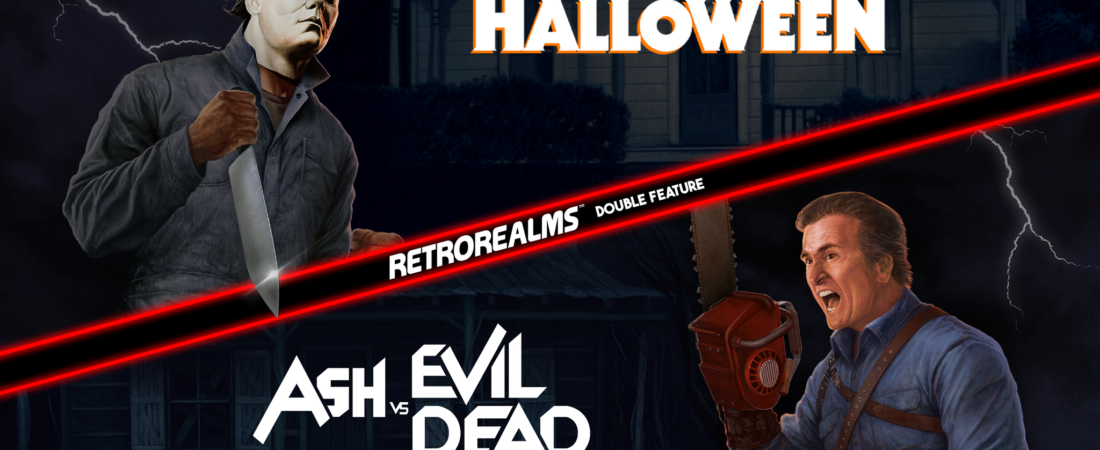
I’m not going to pretend that horror movies have ever been my particular “thing”. It’s a genre I’ve always had a fairly passing relationship with, and although I’m trying to educate myself further as time goes by, there are still plenty of incredibly important movies and characters that I know more through their cultural significance than through actually having watched them. That doesn’t mean I can’t appreciate just how iconic some of these properties have become, though, and it’s probably that perspective which made RetroRealms Arcade such an interesting experience for me when I first played it. I might not have had the same lifelong relationship with Halloween or Ash vs Evil Dead that some fans undoubtedly have, but I could immediately appreciate the significance of bringing those properties together and presenting them in a way that felt genuinely respectful to their histories.
Loading into the game was an experience unlike other “collection” games, something a package such as this could otherwise be undeservedly attributed to. There was no selection screen asking which experience you wanted to dive into; instead, you found yourself in a derelict arcade, with each game fittingly presented as an arcade cabinet. Interacting with those cabinets naturally started the appropriate game, but the real surprise came when you wandered beyond them and discovered the museum, where tickets earned through playing could be spent unlocking props, masks, weapons and various other pieces of memorabilia from the respective movies. Descriptions further emphasised the importance of each item within its relevant universe, culminating in a surprisingly detailed display of love and respect for the IPs involved.
It was also difficult not to look at that setup and assume there would eventually be more. Two cabinets sitting inside an arcade, a museum designed to accommodate memorabilia from different properties and characters that could cross between the existing games all pointed towards something that could grow over time. Horror seemed like an especially natural fit, given the sheer number of iconic properties available, and even as someone who isn’t particularly well versed in the genre, I found myself wondering what WayForward might do with the likes of Friday the 13th, A Nightmare on Elm Street or any number of other recognisable franchises.
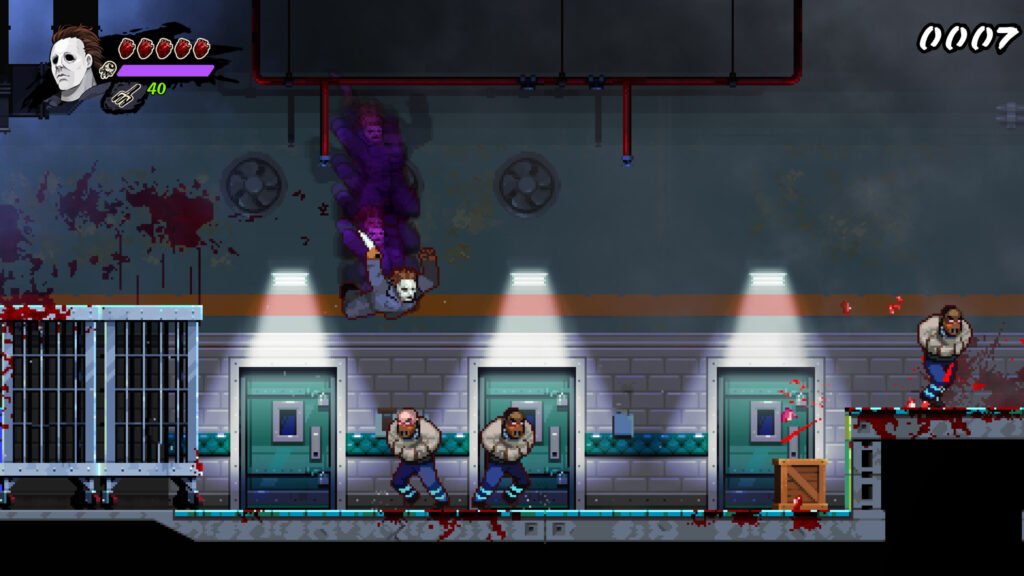
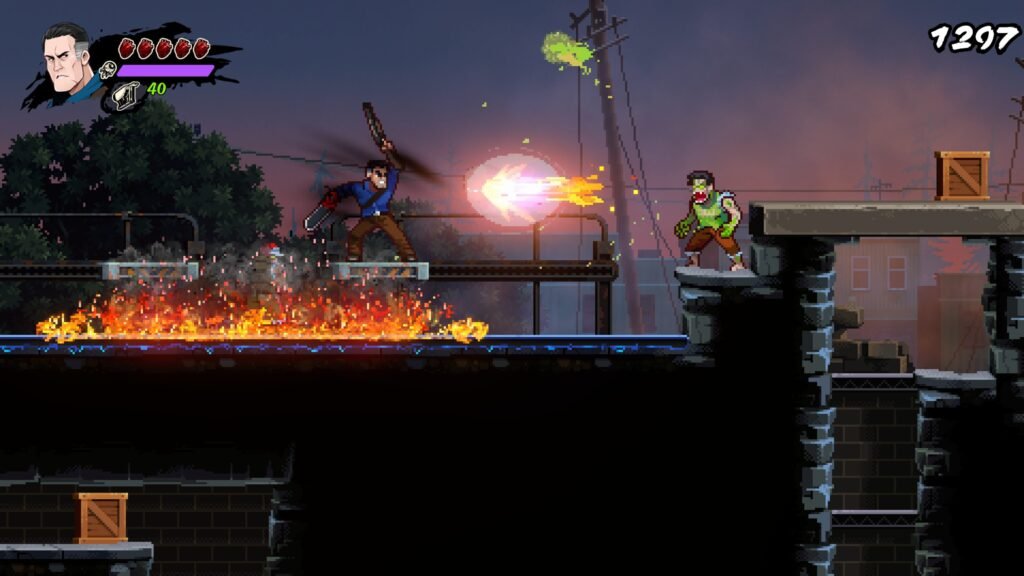
The developer was certainly well equipped to make that interesting. The platforming expertise proudly on display throughout both Halloween and Ash vs Evil Dead was immediately apparent, with rolling, dropping through ledges, wall jumps, and the rest of the expected repertoire feeling as precise as you’d expect from the team behind the Shantae series. There were certainly moments where the sheer number of enemies and environmental hazards made things feel unnecessarily unfair, but the underlying mechanics were still incredibly satisfying. Combat was similarly enjoyable, with Michael Myers naturally leaning more heavily into close-quarters attacks while Ash made considerably more use of ranged weaponry, while the Darkrealm provided another way to revisit levels with stronger enemies and subtle changes to their layouts.
However, one thing concerned me when I first played RetroRealms, and looking back, it feels much more significant. The similarities between the campaigns meant that, despite the different characters and licences, there wasn’t quite enough variation in how they actually played. Both could be completed with either character, and the differences between those characters weren’t substantial enough to make that prospect particularly exciting. Everyone had access to projectiles, the ability to bounce off enemies, charged melee attacks and various other shared mechanics. I could understand why WayForward had done this from a balance perspective, but it made me wonder how future properties would distinguish themselves.
At the time, Shovel Knight: Treasure Trove in particular came to mind as an example of how that could have been handled differently. Yacht Club Games took the same basic platforming foundation and built very different experiences around each character, with levels being reworked or remixed to accommodate their individual movesets. That is what I wanted to see from RetroRealms as it expanded. I wanted Michael Myers to feel fundamentally different from Ash, and if Laurie Strode or Kelly Maxwell were going to be joined by another character from another horror franchise, I wanted their abilities to influence the way the game itself was designed. The licence could then become more than a coat of – albeit stylistically beautiful – paint; it could be the reason for changing how you played.
Unfortunately, we never really got the opportunity to find out whether WayForward could have pulled that off, because the wider expansion I had assumed was coming simply never materialised. That’s perhaps the strangest thing about looking back at RetroRealms Arcade now. The foundation was already there, but instead of becoming a growing collection of horror games, it remained largely centred around the properties with which it began.
I don’t think it’s particularly useful to speculate about why. There are plenty of reasonable explanations for why a project built around licensed properties might not continue, whether that’s the cost of securing additional licences, sales, development resources, negotiations with rights holders or something else entirely. Unless WayForward or the relevant parties ever explain what happened, we simply don’t know. What we can say is that the idea was compelling enough that, at least from the outside, it felt like there was considerably more to come.
Perhaps that’s why RetroRealms has stayed with me more than I expected it to. I wasn’t coming into it as someone with a deep emotional connection to every property involved; if anything, playing it made me more interested in learning about the franchises that inspired it. There was something particularly appealing about seeing these hugely important pieces of horror history translated into a genre I was much more comfortable with, and WayForward managed to make the whole thing approachable without stripping away the identity of the licences. Even when I didn’t recognise every reference or understand the significance of every piece of memorabilia in that museum, I could still appreciate why it was there.
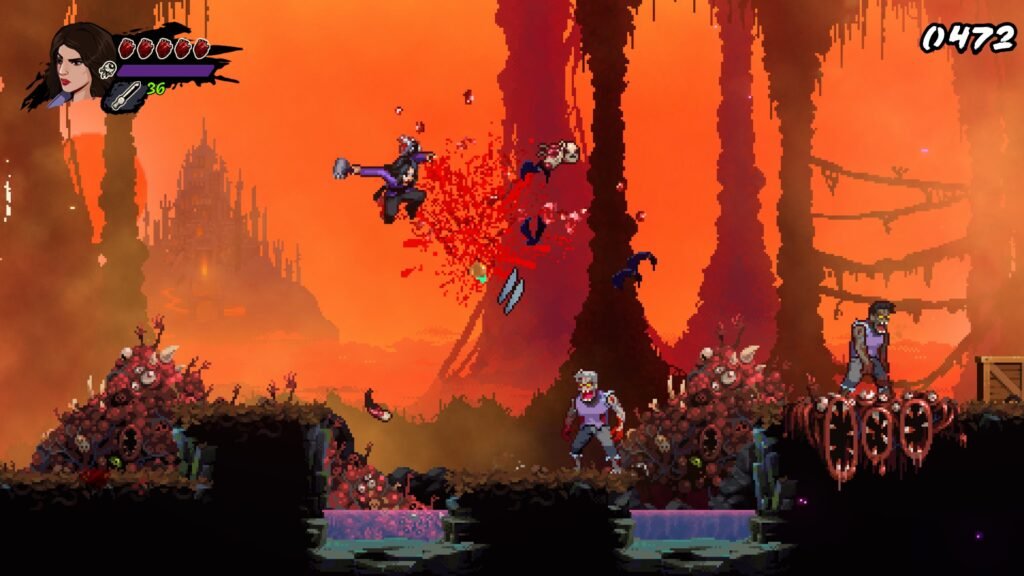
I still pick up my Steam Deck and play it from time to time, particularly when I only have five minutes to spare, because those short bursts of pixelated horror violence remain a surprisingly good fit for the hardware. The original games haven’t suddenly become something they’re not, and some of the concerns I had when I reviewed them in the first place are still there, but there’s something a little bittersweet about returning to that arcade now. I remember how easy it was to imagine another cabinet appearing alongside the first two, and how interesting it could have been to see WayForward take on another property and rethink its platforming around a completely different character.
Instead, we’re left with the two cabinets we started with.
I genuinely thought RetroRealms was going to become something bigger. Not because the first two games were crying out for sequels, but because the way they were presented made it feel as though WayForward had established the beginning of a much more ambitious idea. Looking back now, perhaps that’s the most frustrating part: we got enough of RetroRealms to understand what made it special, but never enough to see what it could have become.
And I still find myself wondering what I would have found in that next cabinet, even despite my fondness for horror.
