

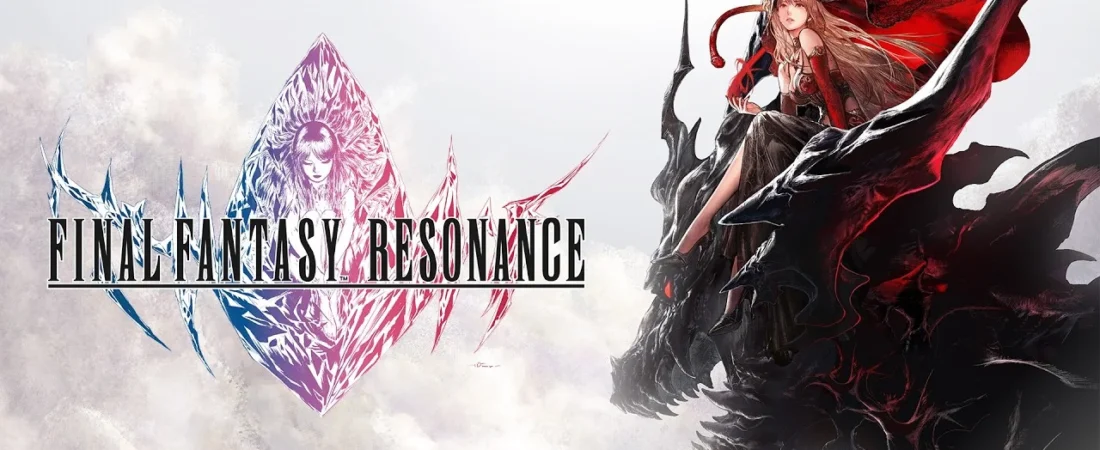
I was a massive fan of Final Fantasy Brave Exvius for the vast majority of its life cycle. There’s something about having a game that brings together characters from across the Final Fantasy franchise that will always appeal to me, and I spent a frankly ridiculous amount of time playing it over the years. My love for it paled in comparison to my brother’s, though, and I think it’s only fair that we acknowledge his contributions to keeping the game alive. Monetarily, I mean. I’m fairly certain he could have funded a small country’s economy with what he put into it.
Joking aside, I have some genuinely fond memories of Brave Exvius, and it’s a game I was more than happy to keep coming back to. That doesn’t mean I thought it was perfect, however, and one of my biggest gripes was always the way its story was handled. There were some interesting ideas in there, and bringing together so many familiar faces from across the series was an easy way to get me invested, but the delivery never quite lived up to the potential. It was also difficult to ignore how much your experience could depend on the characters you managed to pull from its gacha system, particularly when it came to putting together a team capable of handling whatever the story threw at you.
It’s one thing to have a game encourage you to chase a particularly powerful character, but quite another when those same mechanics start getting in the way of the experience you’re actually there for. I wanted to enjoy the story, get attached to its characters, and see where things went. I didn’t necessarily want to spend my time worrying about whether my latest pulls were going to make the next stretch of the adventure a little less painful, and that became the main focus point in and of itself. Thankfully, Final Fantasy Resonance feels like a much better answer to what I always wanted from Brave Exvius. It’s familiar enough that I can recognise the appeal of its predecessor, but it feels considerably more cohesive in how it brings everything together. The characters are more fleshed out, the story carries more weight, and, perhaps most importantly, the game isn’t constantly getting in its own way.
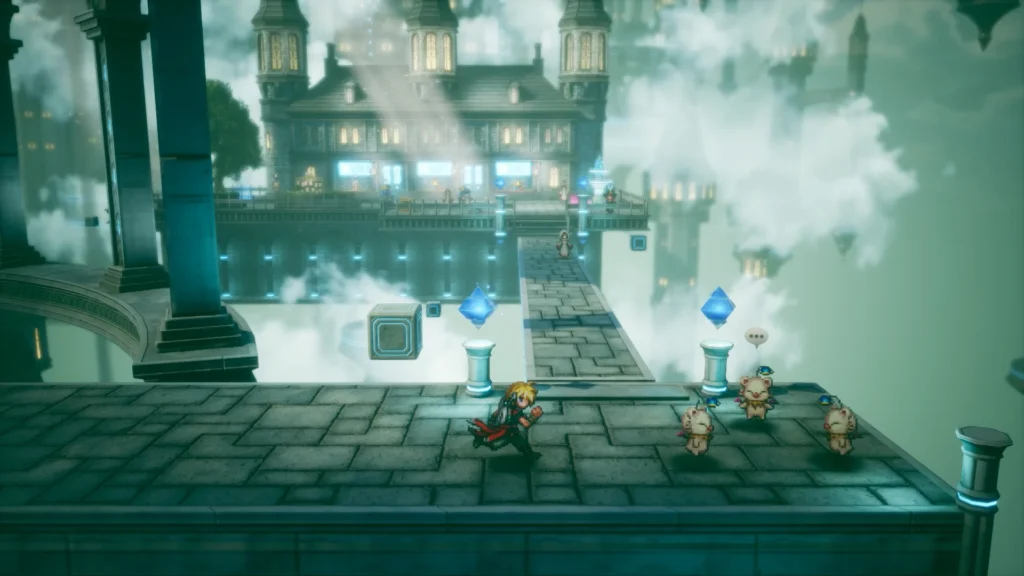
One of the things I’ve always appreciated about Final Fantasy is its ability to make me care about the characters I’m spending dozens of hours with. Whether that’s the cast of Final Fantasy IX, which remains one of my favourite games in the entire franchise, or the emotional journey of Final Fantasy X, it’s the characters and their stories that tend to stick with me long after I’ve put the controller down. That’s something I wanted more of from Brave Exvius, and it’s an area where Resonance feels like a considerable improvement. Its characters have more room to establish themselves, and the story feels as though it has the breathing space it needs to make its moments count. Rather than feeling like a collection of ideas that occasionally struggle to come together, there’s a greater sense of cohesion to the experience, making it easier to get invested in what’s happening.
I don’t think that’s an insignificant distinction, either. When you’re working with a franchise as established as Final Fantasy, there’s an almost endless supply of characters, worlds, and ideas to draw from. The trick is making them feel like they belong in the experience you’re creating, rather than relying on the novelty of seeing a familiar face to do all the heavy lifting.
Resonance does a much better job of making its characters feel like more than additions to a roster. There’s a greater sense of purpose to the storytelling, and the narrative has the weight I’d always hoped to see from Brave Exvius. I found myself appreciating the experience on its own merits, rather than getting caught up in the systems sitting behind it.
That’s not to say that Brave Exvius was without its charm. Far from it. I wouldn’t have stuck with it for so long if there weren’t things I genuinely loved about it. But there’s a difference between enjoying a game and recognising that it could have done certain things better, and Resonance has made that distinction particularly apparent to me.
I’m not going to pretend that gacha mechanics are inherently bad. Clearly, they worked for Brave Exvius, and my brother is probably living proof that there are people more than happy to throw themselves into that sort of game. There’s an appeal to collecting characters, building a team, and getting that one pull you’ve been desperately hoping for. I understand it, even if I’m not necessarily willing to put quite as much money behind it. But when those mechanics start interfering with the story, that’s where I begin to lose patience.
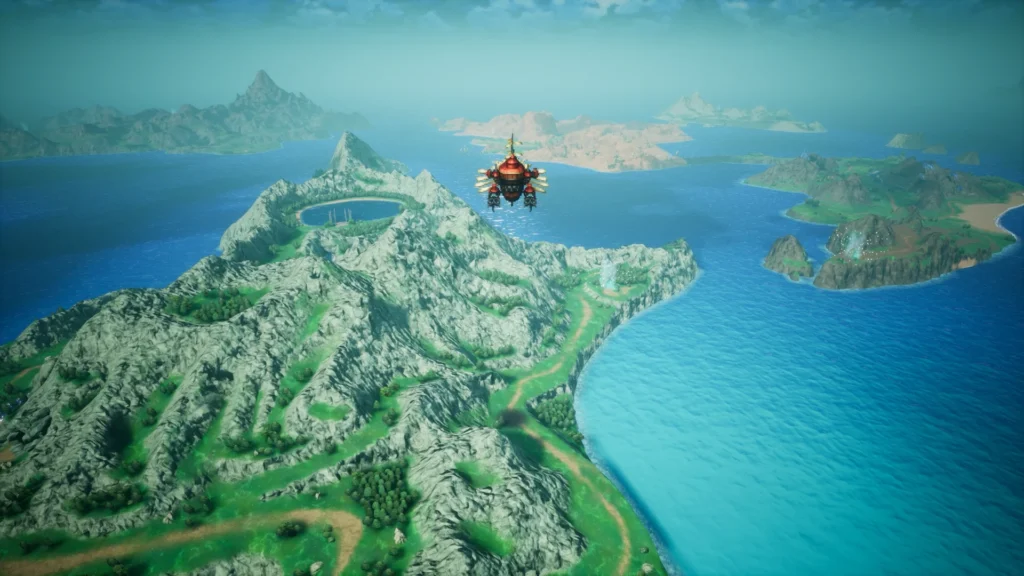
One of the biggest advantages Resonance has over its predecessor is that characters can simply be as strong as they need to be. There’s no need to worry about whether you’ve managed to pull the right unit, or whether the character you really want to use is going to be a liability because you haven’t invested enough into them. The game has more freedom to focus on the experience it’s trying to deliver, and that makes a noticeable difference. It also means the narrative doesn’t have to work around the same restrictions. Characters can be introduced and developed because they belong in the story, rather than because they need to serve another purpose within a free-to-play ecosystem. For me, that’s a much more appealing way of approaching a character-driven RPG, particularly one carrying the Final Fantasy name.
I know this probably sounds like an obvious thing to praise, but having spent so much time with Brave Exvius, it’s difficult not to appreciate the difference. I was already invested in the ideas behind that game, and I wanted to see them succeed. Resonance feels like it finally gives those ideas the sort of foundation they deserve.
If anything, it makes me a little frustrated that Brave Exvius couldn’t have offered a similar experience. I still enjoyed my time with it, and I’m not about to pretend otherwise, but I can’t help feeling that its storytelling could have benefited enormously from having fewer systems competing for the player’s attention. Resonance doesn’t have that problem to the same extent, and it’s all the better for it.
Visually, Final Fantasy Resonance is another lovely example of what Square Enix can do with HD-2D. I’ve been a fan of the style since Octopath Traveler first introduced it, and there’s still something rather special about seeing traditional pixel art brought to life with modern lighting, depth, and visual effects. It manages to feel nostalgic without simply looking like something pulled straight from another era, which is no small achievement.
That said, I do think we’re getting to the point where HD-2D is losing some of its initial wow factor.
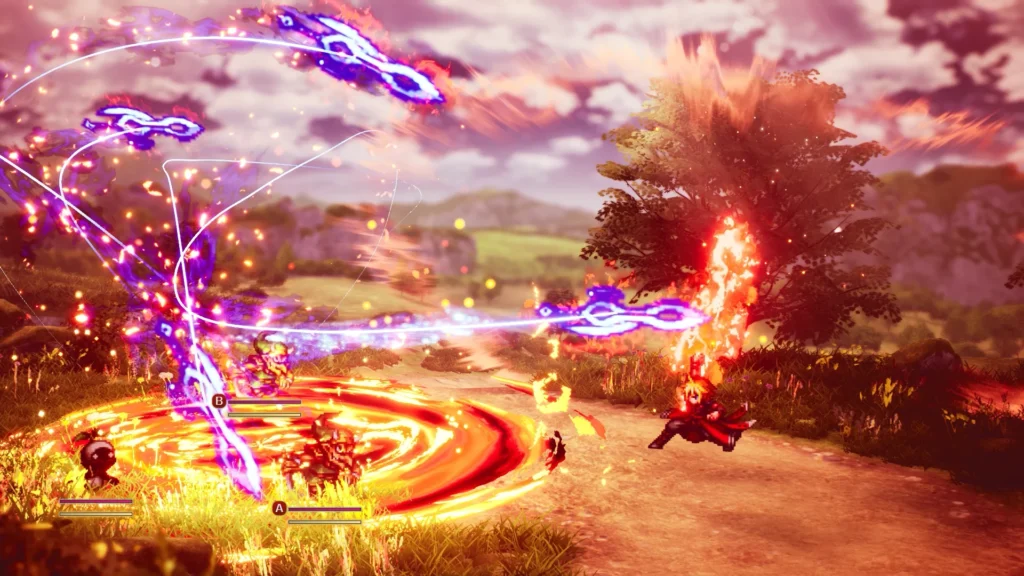
When Octopath Traveler first arrived, I remember being genuinely taken aback by the presentation. It was such a striking way of bringing a classic JRPG aesthetic into the modern day, and it immediately gave the game a visual identity of its own. We’ve had enough games use the style since then, however, that it’s become a little harder to get quite so excited about it.
That’s not to say Resonance doesn’t look fantastic. It does. I just don’t think HD-2D can rely on novelty alone any more, and I find myself paying much more attention to what the game actually does with that presentation than I did when the style was first introduced. I’m certainly not asking Square Enix to abandon it, either. There’s plenty of life left in HD-2D, and I’d much rather see developers continue to refine it than throw away something that works so well. I just think the bar has moved on. The visuals might be what initially catches your attention, but the game underneath needs to give you a reason to stick around.
Fortunately, Resonance has a much stronger argument to make in that department than simply looking pretty.
What I appreciate most about Final Fantasy Resonance is that it feels like a more focused version of something I already know I enjoy. Brave Exvius kept me entertained for years, but there were always things about it that I wished had been handled differently. Resonance feels like an opportunity to revisit some of those same ideas without having to contend with the things that occasionally made its predecessor frustrating.
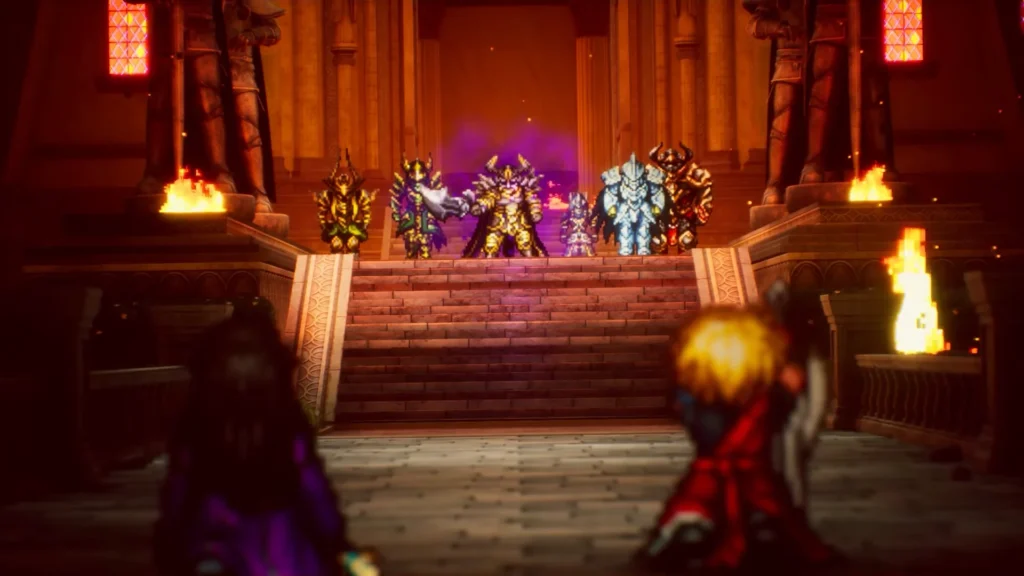
The stronger storytelling and more fleshed-out characters make the experience feel more worthwhile, while removing gacha mechanics allows the game to concentrate on what matters. It’s a relatively simple change in principle, but it has a meaningful impact on how everything comes together. And that’s ultimately what I want from a Final Fantasy game. I want to care about its characters, get invested in its story, and come away feeling as though my time with it was worthwhile. Resonance does a much better job of delivering that experience than Brave Exvius ever managed, and I found that particularly satisfying given how much time I spent with the latter.
Final Fantasy Resonance is what I wish Brave Exvius had been all along. I have no regrets about the time I spent with its predecessor, but Resonance makes it difficult not to wonder how much better that experience could have been if its storytelling had been given the same freedom.
The characters are more fleshed out, the narrative feels more cohesive, and the absence of gacha mechanics makes for a much more satisfying RPG. HD-2D might not have the same impact it once did, but there’s enough here to make Resonance stand on its own two feet rather than relying on its presentation to carry it.
I loved Brave Exvius, but Resonance is the better game, and it’s really not much of a contest. If you’re a Final Fantasy fan who never gave its predecessor a chance, or someone who bounced off the mobile game’s mechanics, I’d absolutely recommend giving this a look. It’s a far more appealing way to experience these ideas, and one that finally lets the story and its characters take priority.
Sometimes, you don’t need to reinvent the wheel. You just need to stop putting obstacles in front of it.
Verdict
Final Fantasy Resonance is what I wish Brave Exvius had been all along. I have no regrets about the time I spent with its predecessor, but Resonance makes it difficult not to wonder how much better that experience could have been if its storytelling had been given the same freedom.
The characters are more fleshed out, the narrative feels more cohesive, and the absence of gacha mechanics makes for a much more satisfying RPG. HD-2D might not have the same impact it once did, but there’s enough here to make Resonance stand on its own two feet rather than relying on its presentation to carry it.
I loved Brave Exvius, but Resonance is the better game, and it’s really not much of a contest. If you’re a Final Fantasy fan who never gave its predecessor a chance, or someone who bounced off the mobile game’s mechanics, I’d absolutely recommend giving this a look. It’s a far more appealing way to experience these ideas, and one that finally lets the story and its characters take priority.
Sometimes, you don’t need to reinvent the wheel. You just need to stop putting obstacles in front of it.
