

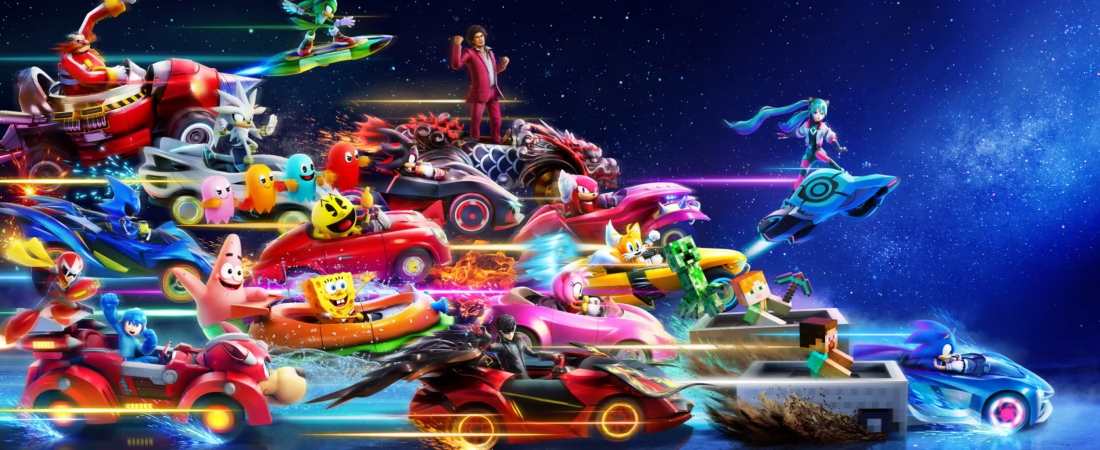
When I first reviewed Sonic Racing: CrossWorlds, I couldn’t quite shake the feeling that Sega had created something that was perhaps a little too chaotic for its own good. There was plenty to enjoy, from the wonderfully satisfying drifting to the transformations that had me reminiscing about the utterly fantastic Sonic & All-Stars Racing Transformed, but there was also a distinct lack of cohesion that prevented it from reaching the heights I had hoped for. It was fun, certainly, but it wasn’t without its frustrations, and I found myself wishing that Sega had shown just a little more restraint.
Well, I suppose I should be careful what I wish for.
Because in the months since launch, Sega has seemingly taken the opposite approach, throwing an almost absurd amount of content at CrossWorlds and turning what was already a fairly sizeable kart racer into something that feels considerably more substantial. And I don’t just mean a handful of additional characters to pad out the roster, either. We’re talking new vehicles, entirely new courses, music, Gadgets, gameplay variations, competitive improvements and a frankly ridiculous assortment of crossover collaborations that have made the game’s first year something rather special.
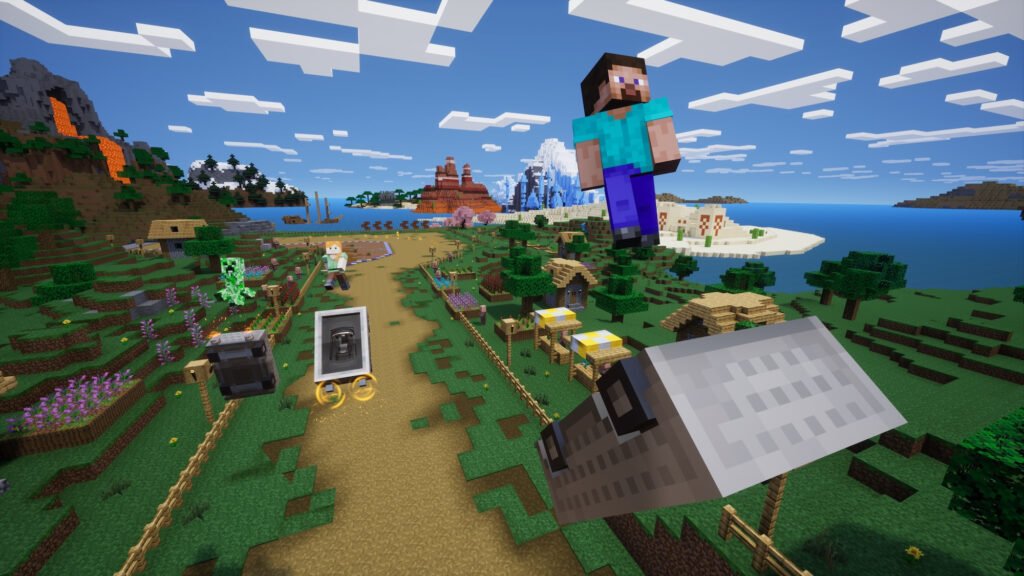
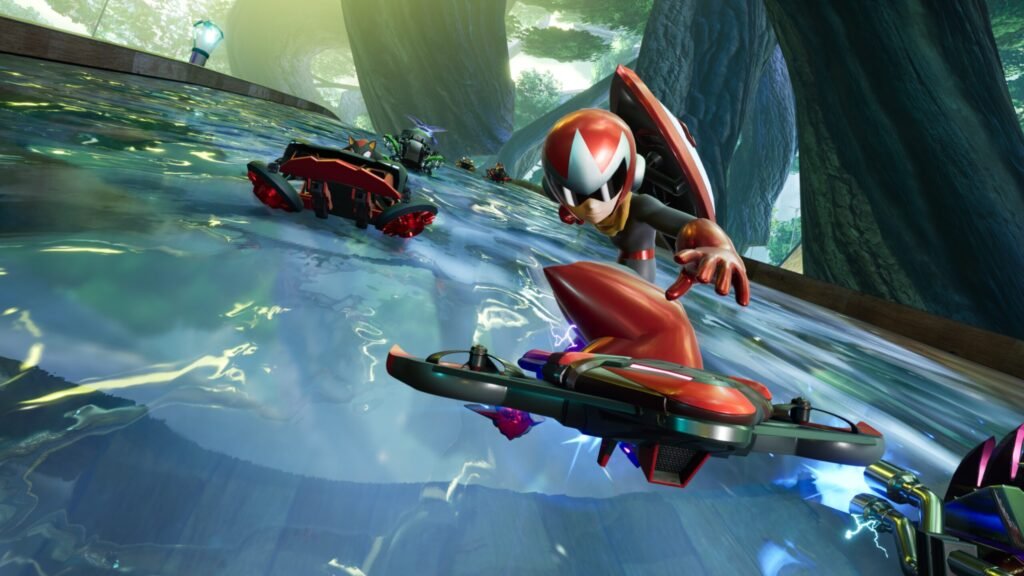
It’s difficult to know where to begin, really. Hatsune Miku, Joker from Persona 5, Ichiban Kasuga from Like a Dragon, NiGHTS, AiAi from Super Monkey Ball, Tangle and Whisper from the Sonic comics, Red from Angry Birds, Goro Majima, Arle from Puyo Puyo, Classic Sonic, Axel from Crazy Taxi and Amigo from Samba de Amigo have all found their way onto the starting grid through free updates. That’s before even considering the premium content, which has brought us Minecraft, SpongeBob SquarePants, PAC-MAN, Mega Man, the Teenage Mutant Ninja Turtles and, most recently, Avatar: The Last Airbender.
I genuinely don’t know what the conversation was like when somebody first suggested putting SpongeBob and Patrick into a Sonic racing game, but I’m very glad somebody had it.
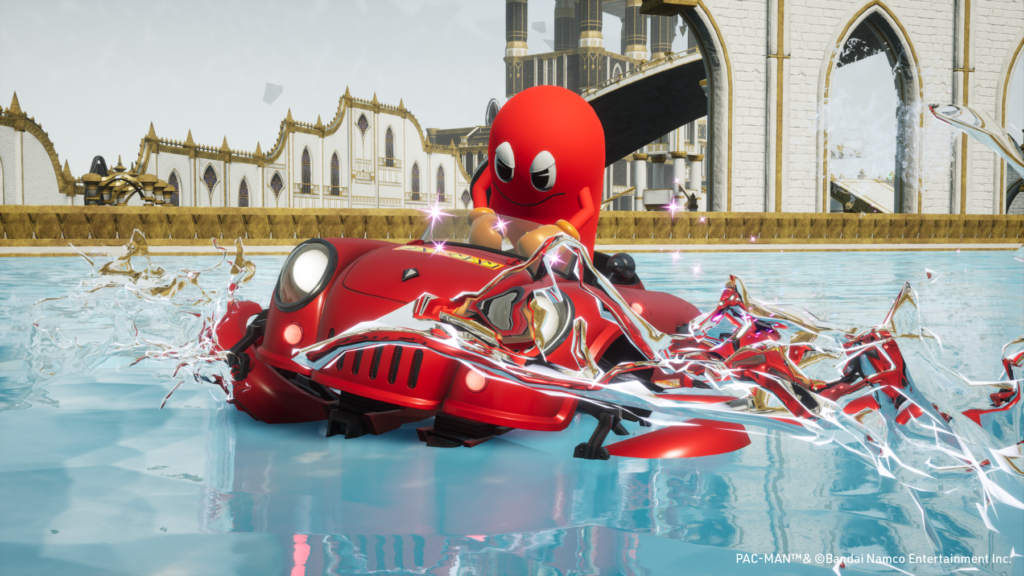
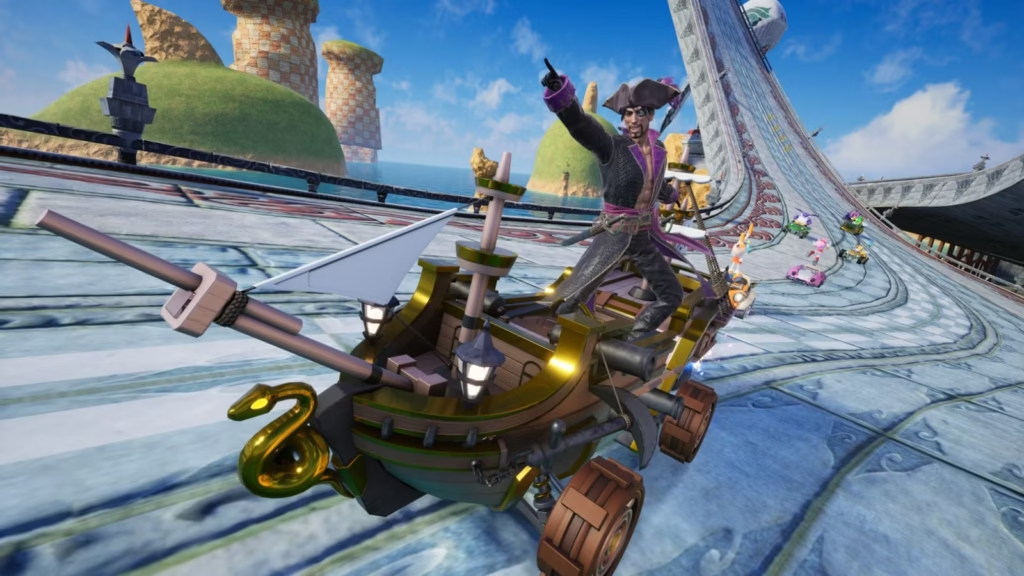
What makes this particularly impressive is that these aren’t simply characters being dropped into the existing game with very little consideration. The premium crossover packs have consistently brought their own vehicles, dedicated courses, music and character-specific extras, giving each collaboration a reason to exist beyond the novelty of seeing an unexpected face behind the wheel. Racing around Bikini Bottom in the Patty Wagon, tearing through Wily Castle with Mega Man, or taking on PAC-Village & Maze in the PAC-MAN Mobile gives each addition a little more substance than I’d ordinarily expect from this sort of post-launch content.
And there’s a wonderful sense of personality to the whole thing. I spoke in my original review about how CrossWorldscould occasionally feel surprisingly sterile given the wealth of history and character Sega has at its disposal. It’s difficult to level that same criticism at a game that has spent the better part of a year inviting increasingly unlikely guests to join the race. The roster has become a celebration of gaming and entertainment in a way that feels genuinely exciting, and while some of the additions are undoubtedly more appealing to me than others, there’s something to be said for the sheer enthusiasm behind it all.
Importantly, though, the support hasn’t stopped at the characters and their accompanying content. Sega has continued to tinker with the actual racing experience, too, and that’s arguably where its commitment has been most encouraging.
The Gadget system, which I initially found to be an interesting but somewhat necessary means of compensating for the game’s occasionally questionable item balance, has received a considerable amount of attention. New Gadgets have opened up additional approaches to customising your machine, while balance adjustments have attempted to make previously less viable strategies more appealing. The introduction of Bonus Ring Frenzy, alongside the wider availability of Item Box Frenzy, has also provided another way to shake up the familiar racing formula. There are even eight classic Sega racing tracks now available through the Jukebox, which is a rather lovely addition for anyone with a particular fondness for the company’s racing heritage.
Online play hasn’t been forgotten, either. Legend Competition introduced another avenue for competitive racing, while subsequent updates improved rewards, expanded the rating system and allowed World Match to remain available during Festivals. These might not be the sort of additions that generate the same excitement as seeing Mega Man or the Teenage Mutant Ninja Turtles announced, but they’re precisely the sort of ongoing improvements that make a difference when you’re spending considerable time with a game.
I was particularly pleased to see Sega continue to address balance issues, too. My original review was fairly vocal about the frustration caused by items, especially when their impact could bring an otherwise enjoyable race to an abrupt halt. I wouldn’t pretend that every subsequent adjustment has magically solved that problem, but there’s an obvious willingness to monitor how people are playing, identify dominant strategies and make changes accordingly. That’s something I can appreciate, particularly in a genre where the difference between an exhilarating comeback and an utterly miserable experience can sometimes be a single item.
And this is where I think other kart racers could learn something from CrossWorlds.
There’s a tendency for games in this genre to arrive with a relatively predictable lifecycle. They’re released, perhaps receive a handful of updates or additional characters, and then gradually disappear from the conversation as players move on to the next big thing. That’s not necessarily a criticism of every developer, nor is it an expectation that every kart racer should become a live-service commitment that demands your attention indefinitely. But there’s something refreshing about seeing Sega recognise that a game like this has the potential to be so much more than the experience available on day one.
Mario Kart is, of course, the obvious comparison. Nintendo has spent decades refining its formula, and Mario Kart Worldis another reminder of just how effortlessly the company can put together a cohesive racing experience. But there’s a difference between refining an established offering and continually finding ways to expand it. CrossWorlds has embraced the latter, and its willingness to introduce characters and worlds from seemingly anywhere has given it an identity that would be difficult for its competitors to replicate.
I’d love to see more developers approach the genre with a similar level of enthusiasm. Not necessarily by throwing every recognisable character they can find into a vehicle, although I’m certainly not going to complain if that happens, but by recognising that additional content should feel like a meaningful extension of the game. New courses should give players somewhere exciting to race, new characters should bring a little personality, and updates should demonstrate that the developer is paying attention to the people actually playing.
There’s also something to be said for the generosity of the free additions. While the six major crossover packs have understandably been positioned as premium DLC, the likes of Miku, Joker, Ichiban and the many other guest racers have arrived without requiring players to open their wallets again. It’s a healthy balance between paid expansions that offer substantial new content and free additions that give everyone another reason to jump back in.
I don’t think CrossWorlds has suddenly become the perfectly balanced kart racer I wanted it to be when I first played it. The chaotic nature of its racing can still be a little overwhelming, and I suspect I’ll always prefer the more measured approach of Mario Kart. But that’s not really what this is about.
What Sega has demonstrated throughout the game’s first season is that there’s considerably more life to be found in a kart racer than simply releasing it, enjoying a few months of attention and moving on. It has given players reasons to return, things to look forward to and, perhaps most importantly, the impression that their continued enthusiasm for the game is being rewarded.
When I originally finished my review, I wanted Sega to show a little more restraint. Instead, it has spent the intervening months doing pretty much the opposite, and I can’t help but admire it for that.
Other kart racers don’t necessarily need to follow CrossWorlds‘ approach wholesale, but they could certainly learn from its commitment to keeping things fresh. Because if there’s one thing I’ve taken away from the game’s first season, it’s that sometimes the best thing you can do with a perfectly good kart racer is give people a bloody good reason to keep playing. Bring on season two.
