

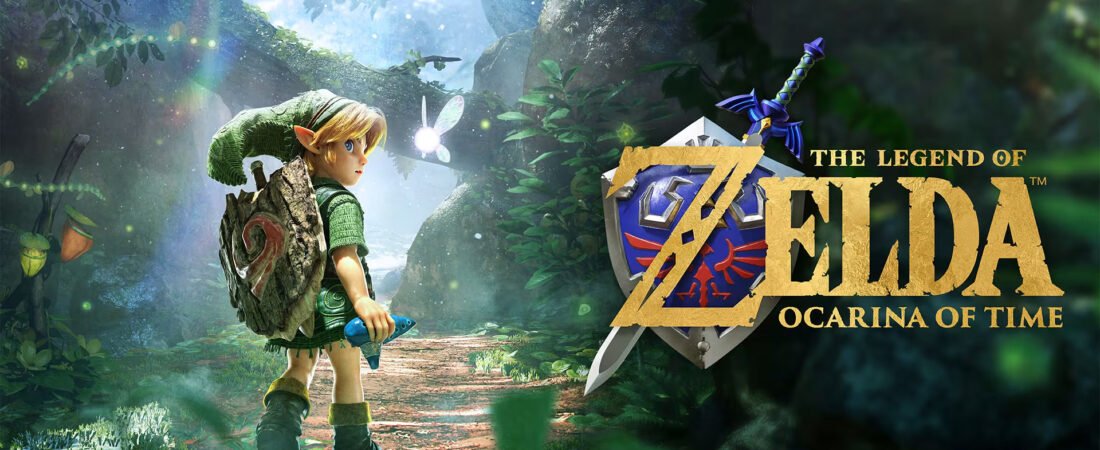
Ocarina of Time is one of those games that has always occupied a pretty special place in my gaming history. I missed the original Nintendo 64 release, instead finding my way to Hyrule through the GameCube version, but that was more than enough to make it an adventure I’ve carried with me ever since. I’ve revisited it over the years, know most of its twists and turns by heart, and have always considered it one of the very best Zelda games. So, when the opportunity came to experience it again on Nintendo Switch 2, I was looking forward to returning to somewhere that felt incredibly familiar. What I didn’t anticipate was just how much I’d fall in love with it all over again.
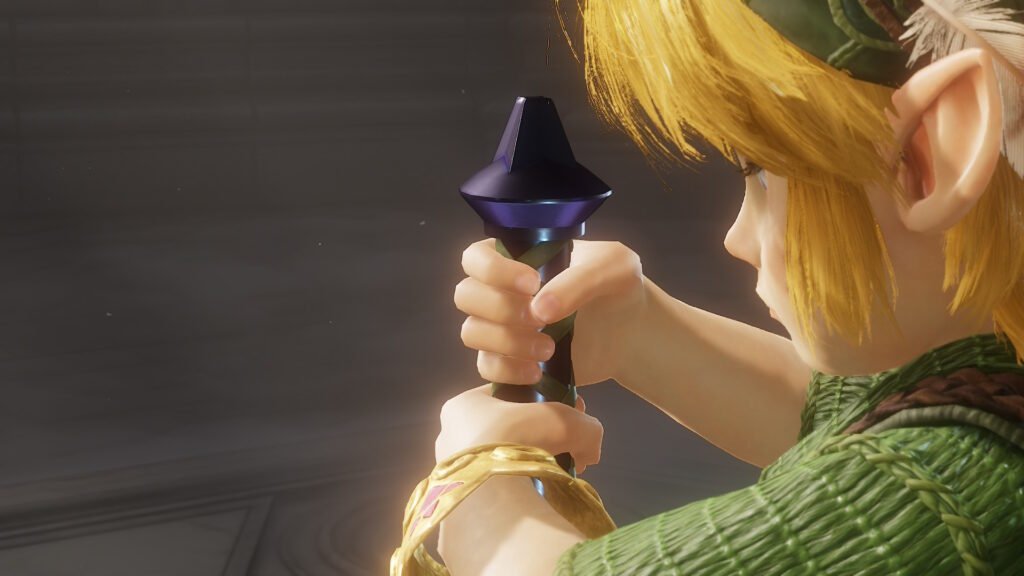
I think it’s safe to start by mentioning that I don’t usually spend much time taking screenshots while playing video games. Every now and then something might catch my eye, but it’s hardly a habit of mine. Yet here I am, with well over 100 screenshots captured before Link has even made the transition into adulthood. I suppose that’s a fairly good indication of just how much I’ve been enjoying my time in Hyrule, but it’s also a testament to just how gorgeous this version of the game is.
There’s a warmth to Hyrule that I’ve found myself particularly drawn to this time around. The original art direction has held up remarkably well, and seeing familiar locations presented this way has given me plenty of reasons to stop and take in the scenery. The soundtrack has also been a joy to revisit, retaining the music I know so well while sounding more beautiful than I could have imagined. These are compositions that have always been memorable, but I’ve found myself taking a little more time to appreciate them on this return visit.
There are some welcome modern additions, too. Proper camera controls and a dedicated jump button aren’t exactly revolutionary in 2026, but they make moving around the world considerably more comfortable. The original controls never made Ocarina of Time a chore to play, but these changes remove some of the little frustrations that can come with revisiting older games without compromising what made the experience work in the first place.
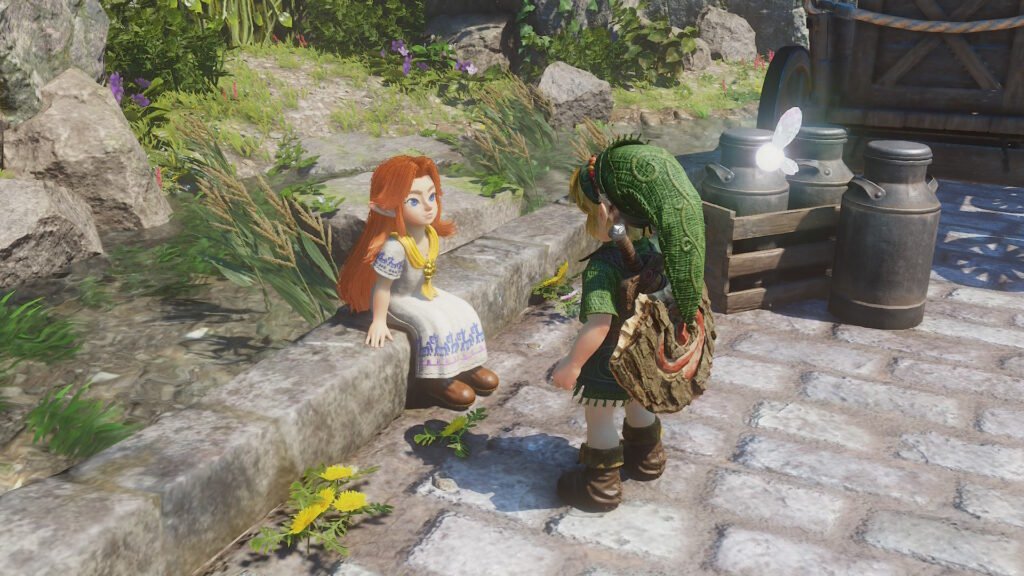
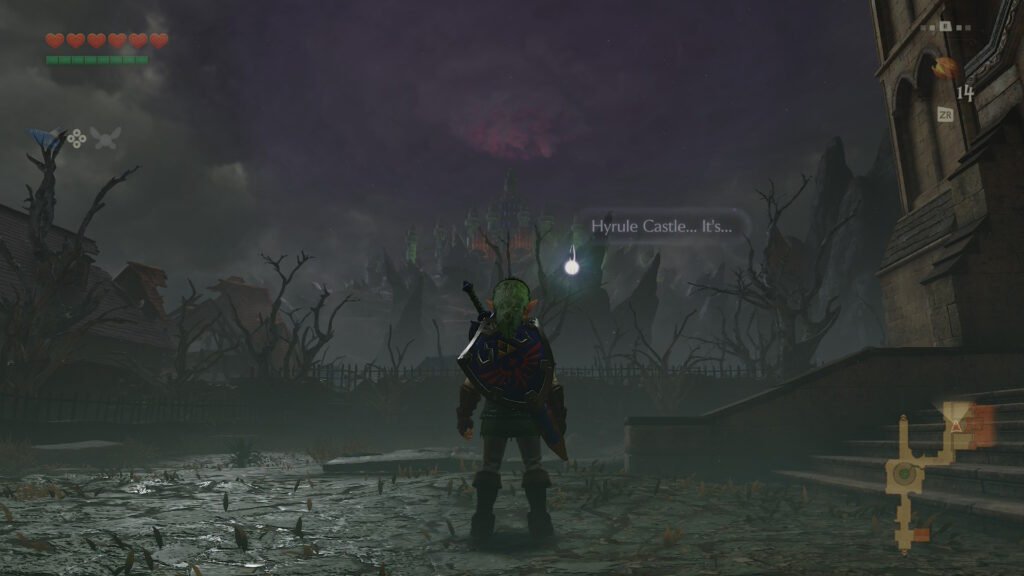
One of the things I’ve particularly enjoyed is how much more striking the transition between young Link and adult Link feels. There’s an infectious sense of optimism to Hyrule during the early hours, where everything feels colourful, magical and full of possibility. Then you wake up as an adult, and that familiar world has changed almost beyond recognition. The contrast has always been one of the game’s most memorable storytelling devices, but seeing it presented this way makes the shift hit harder. I still prefer the almost life-is-wonderful feeling of exploring as young Link, but returning to a world in ruin as an adult is a powerful reminder of just how much has been lost.
The dungeons remain the heart of the experience. Each has its own identity, bringing together puzzles, enemies and environmental challenges that encourage you to pay attention to your surroundings and make proper use of the items you’ve collected. There’s a particular satisfaction in gradually understanding a dungeon’s layout, working out how its different areas connect and finally finding the solution to a puzzle that’s been holding you up. The boss encounters provide a fitting conclusion, often asking you to put what you’ve learned into practice.
Some dungeons are undoubtedly stronger than others, and occasional backtracking or an especially obscure puzzle can test your patience, but there’s a reason this approach to dungeon design has remained so beloved. They feel like meaningful parts of Link’s journey rather than a collection of disconnected challenges, and it’s something I’ve found myself missing in more recent entries. Exploration has also been a pleasant surprise. Despite knowing the vast majority of the game like the back of my hand, I’ve found myself wanting to investigate every corner of Hyrule – I’ve particularly enjoyed collecting Gold Skulltulas this time around, perhaps because I’ve grown a little more patient with this sort of thing, or simply because there’s something satisfying about tracking them down and ticking them off. Or because they look so damn cute, and I hate spiders. I’m sure it’s the latter.
Hyrule Field is perhaps where the passage of time is most apparent. It felt fairly empty when I first played Ocarina of Time, although expectations were understandably different back then. It served its purpose as the gateway between the various locations that made up the adventure, and there was something exciting about setting off across it towards somewhere new. Returning to it now, that feeling of an empty hub world connecting more interesting areas is harder to ignore. Compared with what we’ve come to expect from modern open-world adventures, there’s not a great deal happening between destinations. It’s hardly a deal-breaker, but it does highlight how much our expectations of exploration have changed.
Combat, meanwhile, remains satisfying without offering the same level of challenge we’ve come to expect from Breath of the Wild or Tears of the Kingdom. The Z-targeting system still works wonderfully, making encounters feel deliberate without becoming overly complicated. I’m actually glad the game has stayed faithful to the original approach rather than attempting to bring combat up to modern standards. It suits the adventure, and there’s little reason to change something that still works.
I have, however, found the puzzles and encounters considerably easier than I remember. Whether that’s down to getting older, the improved camera controls removing some of the previous frustrations, or simply the game being more approachable than I gave it credit for, I’m not entirely sure. I’ve certainly spent less time scratching my head than expected. It’s left me rather hopeful that we might see the Master Quest version arrive in the near future. Its reworked dungeon layouts and more demanding puzzles would give those of us familiar with the original a welcome reason to revisit the adventure again.
One thing I haven’t found myself wanting is for the game to move any faster. The pacing feels spot on, giving you enough time to become acquainted with Hyrule before gradually opening up the adventure. The transition into adulthood arrives at just the right moment, while the balance between exploration, dungeon crawling and story progression rarely feels as though it’s dragging its feet. There’s a confidence to the way Ocarina of Time unfolds that remains impressive.
Returning to it after spending so much time with the more recent entries has also reminded me how much I miss the traditional Zelda formula. I’ve enjoyed what Nintendo has achieved with Breath of the Wild and Tears of the Kingdom, but there’s something about those larger, more involved dungeons that I find particularly satisfying. Being dropped into a sprawling location, gradually learning its layout, discovering new areas and working towards a boss encounter offers a sense of progression that I never quite found in Breath of the Wild’s shrines. I enjoyed those bite-sized puzzle experiences, but they never connected with me in quite the same way.
That’s not to say I’d want Nintendo to abandon its newer approach. There’s room for both styles of Zelda to coexist, and if anything, this return to Ocarina of Time has reminded me how much I’d like to see the traditional formula receive a little more attention in the future.
There’s an undeniable amount of nostalgia attached to revisiting Ocarina of Time, particularly given my own history with it, but this hasn’t simply been a case of looking backwards. I’ve enjoyed rediscovering familiar places, finding new reasons to explore and appreciating the adventure from a slightly different perspective. Seeing a game that meant so much to me on GameCube presented this beautifully is something I could only have imagined back then, and it’s been a genuine joy to experience.
Verdict
Ocarina of Time is every bit as wonderful as I remember, and perhaps even more so. Its traditional dungeon design, memorable soundtrack and wonderful sense of discovery have lost very little of their appeal, while the presentation on Nintendo Switch 2 has given me a fresh appreciation for an adventure I’ve played countless times before. There are signs of its age, and I’d welcome the added challenge of Master Quest, but they’re minor blemishes on an otherwise exceptional experience.
I went into this expecting to revisit a game that meant a great deal to me, but I didn’t quite expect to come away appreciating it quite so much. It’s reminded me that there’s a particular magic to this era of Zelda that I’d desperately like to see more of. Ocarina of Time remains one of the very best adventures the medium has to offer, and I couldn’t ask for much more.
